Crafting a exceptional Mexican Lager demands precision and a nuanced understanding of brewing science, moving beyond simple recipe adherence. The accompanying video demonstrates a practical approach to brewing a crisp, light-bodied Mexican-style Lager. This detailed guide expands on those principles, exploring the critical decisions that shape a superior lager, from water chemistry to advanced fermentation techniques, ensuring a clean, highly drinkable result.
Mastering the Foundation: Water Chemistry for a Crisp Mexican Lager
Water composition fundamentally dictates the character of any beer, and a Mexican Lager is no exception. Achieving the desired crispness and dryness requires careful manipulation of mineral content. As the video highlights, commencing with reverse osmosis (RO) water provides a blank canvas, essential for precise adjustments.
Specific mineral additions guide the mash pH and influence the beer’s overall profile. For this 4.8-gallon batch, the target profile emphasizes dryness and a clean finish, aligning with the style. Adding 0.5 grams of Calcium Chloride (CaCl₂), 0.4 grams of Epsom Salt (MgSO₄), and 1.2 grams of Gypsum (CaSO₄) serves a distinct purpose. Calcium (from CaCl₂ and Gypsum) is pivotal for enzyme activity during the mash, yeast flocculation, and overall beer clarity. Sulfate (from Gypsum) accentuates hop bitterness and contributes to a drier perception, while Chloride (from CaCl₂) can enhance malt sweetness and body. However, in this case, the lower chloride amount coupled with higher sulfate pushes the profile towards a more attenuative and crisp finish.
This deliberate mineral balance helps depress the pH slightly, optimizing enzyme function at the 150°F (65°C) mash temperature. A properly managed mash pH is vital for efficient sugar conversion and minimizing harsh astringency, crucial for a clean-tasting lager. Neglecting these precise water adjustments often results in beers lacking the defined edge typical of well-made lagers.
The Fermentable Bill: A Lean, Clean Base
The choice of fermentables defines the body, color, and underlying sweetness of the Mexican Lager. To achieve a light-bodied, pale, and highly drinkable beer, the grist bill leans heavily on Pilsner malt, supplemented by Vienna malt and a significant portion of flaked corn.
Pilsner malt, constituting 66.7% (5 pounds) of the grist, provides the backbone of this Mexican Lager. This base malt, known for its delicate, bready, and slightly sweet character, contributes minimal color but delivers a highly fermentable sugar profile. Its clean flavor allows other ingredients to shine without competition.
A smaller addition of Vienna malt, at 13.3% (1 pound), introduces a subtle layer of malt complexity. Vienna malt offers a slightly toastier, more robust malt character than Pilsner, imparting a golden hue and a touch of sweetness without veering into overly biscuity or caramel notes. This choice elegantly balances the lightness of Pilsner with just enough depth.
Crucially, 20% (1 pound 8 ounces) of flaked corn rounds out the fermentables. Flaked corn is a common adjunct in many American and Mexican lagers, serving multiple roles. Primarily, it significantly lightens the body of the beer, contributing highly fermentable sugars without adding much residual sweetness or color. This leads to the characteristic crisp, dry finish of the style. While some recipes might push for amber hues, this formulation prioritizes a lighter, more refreshing profile, where the corn plays a pivotal role in achieving that crisp, attenuated character.
The combined effect of these fermentables is a highly fermentable wort with an original gravity (OG) of 1.058, destined for a dry finish. The high fermentability reduces residual sugars, promoting the clean, refreshing quality central to a quality Mexican Lager.
Precision Mashing and Wort Production
Executing the mash effectively is fundamental to extracting fermentable sugars and achieving optimal clarity. This Mexican Lager recipe employs a 60-minute mash at a consistent temperature of 150°F (65°C). This specific temperature choice targets beta-amylase activity, an enzyme crucial for producing highly fermentable sugars, which are key to the beer’s dry finish. A lower mash temperature, typically between 148-152°F (64-67°C), favors beta-amylase, yielding more fermentable dextrins and fewer non-fermentable sugars.
After the mash concludes, separating the wort from the spent grains is the next critical step. Draining the wort and recirculating a portion over the grain bed, also known as sparging, effectively rinses residual sugars from the grains. This process not only boosts mash efficiency but also helps in clarifying the wort by creating a natural filter bed. Running off the wort while simultaneously heating the kettle accelerates the brewing process, preparing for the upcoming boil.
The subsequent 60-minute boil serves several purposes beyond sanitation. It denatures enzymes, isomerizes hop alpha acids, precipitates proteins (the hot break), and drives off undesirable volatile compounds. A vigorous boil is essential for these transformations, contributing to the beer’s stability, clarity, and overall flavor profile.
Hop Additions: Aromatic Balance, Not Bitterness Dominance
The hop schedule for this Mexican Lager emphasizes aroma and a gentle balancing bitterness rather than a pronounced hop presence. The goal is to complement the clean malt profile without overwhelming it, distinguishing it from more hop-forward styles.
The first wort hop addition occurs just as the kettle approaches a boil. A half-ounce of Mount Hood hops (6.0% Alpha Acid) is added at the 60-minute mark. First wort hopping (FWH) is a technique where hops are added to the kettle as it fills with wort from the mash tun, before the boil begins. This method often results in a softer, more refined bitterness and enhanced hop aroma compared to a traditional bittering addition at the start of the boil. Mount Hood, a noble-type hop, contributes a mild, clean, and slightly spicy aroma that harmonizes well with the lager’s character, providing approximately 15.8 International Bitterness Units (IBU).
Towards the end of the boil, at the 5-minute mark, a combination of 0.5 ounces of Saaz (4.5% Alpha Acid) and 0.5 ounces of Tettnang (4.5% Alpha Acid) is introduced. Saaz and Tettnang are classic noble hops renowned for their delicate, floral, spicy, and slightly earthy notes. These late additions contribute minimal bitterness (around 2.4 IBU each) but significantly enhance the aromatic complexity, providing a more pronounced herbal and floral bouquet. While some traditional Mexican Lagers might feature a less prominent hop aroma, this selection offers a pleasant boost without becoming assertive. This intentional choice creates a Mexican Lager with a distinctive, inviting aroma, balancing traditional lager crispness with an elegant hop character.
Innovative Fermentation: Warm Lagering with a Spunding Valve
Traditional lagering involves fermenting at cold temperatures (typically 45-55°F or 7-13°C) for extended periods. However, this recipe employs an innovative technique: warm lagering with a spunding valve, conducted at room temperature (68°F or 20°C). This method challenges conventional wisdom but can yield excellent results when managed properly, offering a practical solution for homebrewers without precise temperature control.
After cooling the wort to 70°F (21.1°C) and transferring 3.5 gallons into a five-gallon torpedo keg, the White Labs WLP940 Mexican Lager strain is pitched. This specific yeast strain is known for its clean fermentation profile, even at slightly warmer temperatures. The crucial element in this warm lagering approach is the spunding valve.
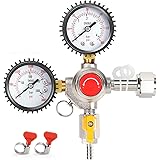
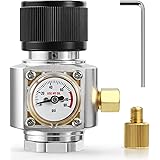
A spunding valve allows the brewer to control the pressure inside the fermenter during fermentation. By maintaining pressure between 12-14 PSI for 14 days at 68°F (20°C), the spunding valve helps suppress the production of common off-flavors associated with warm lager fermentation. Higher temperatures can promote the formation of undesirable compounds like fusel alcohols (harsh, solvent-like), esters (fruity/floral notes), diacetyl (buttery), acetaldehyde (green apple), and sulfur compounds (rotten eggs). Fermenting under pressure inhibits the yeast’s ability to produce these compounds and also encourages their reabsorption, resulting in a cleaner, crisper beer.
This technique also offers a “hands-off” approach, minimizing the need for frequent gravity readings, as the contained environment manages itself. The self-carbonation benefit of a spunding valve also streamlines the post-fermentation process. This demonstrates how modern homebrewing tools can replicate traditional results under non-traditional conditions, delivering a clean Mexican Lager without the typical cold crash constraints.
Conditioning for Clarity and Flavor Refinement
Post-fermentation, proper conditioning is essential for achieving the crystal clarity and polished flavor profile expected of a quality Mexican Lager. This process involves cold crashing, clarification, and an extended period of maturation.
After 14 days of pressurized fermentation at 68°F (20°C), the keg is purged with CO2 and sanitizer, then transferred to a keezer for a cold crash. Lowering the beer’s temperature to 38°F (3.3°C) for approximately 48 hours dramatically accelerates the settling of yeast and other suspended particles. Cold crashing causes these particles to flocculate and drop out of suspension, preparing the beer for further clarification.
Following the cold crash, the beer is transferred to a final serving keg. At this stage, Biofine Clear, a clarifying agent, is introduced. Biofine Clear is a fining agent that works by attracting and binding to negatively charged particles (like yeast cells and proteins), causing them to settle out of solution more rapidly. This enzymatic aid effectively enhances the beer’s visual brilliance, ensuring a homebrew-clear appearance, which is particularly desirable in a light-bodied Mexican Lager.
The final crucial step involves several more weeks of conditioning in the keg. During this period, often referred to as lagering or maturation, remaining off-flavors are reabsorbed by the yeast, and the flavor profile harmonizes. This extended cold conditioning allows the beer to mellow, develop a smoother mouthfeel, and integrate all its components, culminating in a highly drinkable 5.8% ABV Mexican Lager with a light body and crisp finish. The combination of meticulous ingredient selection and controlled fermentation processes, including warm lagering and cold conditioning, yields a flavorful and impeccably clear Mexican-style Lager.
Brewing Up Answers: Your Mexican Lager Questions
What kind of beer is a Mexican Lager?
A Mexican Lager is typically a crisp, light-bodied, and highly drinkable beer. This recipe aims for a clean and refreshing result.
Why is water important when brewing a Mexican Lager?
Water composition significantly affects the beer’s character, especially its crispness and dryness. Using reverse osmosis (RO) water allows for precise mineral adjustments to achieve the desired profile.
What are the main ingredients used for the beer’s body and flavor in this recipe?
The recipe primarily uses Pilsner malt for its delicate backbone, Vienna malt for subtle complexity, and flaked corn to lighten the body and create a crisp, dry finish.
What is a ‘spunding valve’ and how is it used in this brewing method?
A spunding valve is a device that controls the pressure inside the fermenter during fermentation. In this recipe, it allows for ‘warm lagering’ at room temperature by preventing off-flavors and ensuring a cleaner, crisper beer.
How is the beer made clear after fermentation?
After fermentation, the beer is ‘cold crashed’ by lowering its temperature to help yeast and other particles settle. Then, a clarifying agent like Biofine Clear is added to ensure a crystal-clear appearance.