The journey into homebrewing often begins with a vision of crafting exceptional beer, only to be met with the daunting reality of extensive equipment lists and production volumes typically ranging from 25 to 30 liters per batch. For many aspiring brewers, this significant commitment in both capital and storage space proves to be an insurmountable barrier. However, as demonstrated in the insightful video above, a more accessible path exists: small-batch homebrewing, particularly through the efficient brew-in-a-bag (BIAB) method, allowing for the creation of delightful 5-liter batches of Czech-style lager with minimal investment and logistical complexity.
This approach democratizes the brewing process, enabling enthusiasts to explore the nuances of fermentation without the pressure of managing gallons of liquid. The focus shifts from scale to learning, fostering an environment where experimentation with ingredients and techniques becomes a joyful endeavor rather than a high-stakes gamble. Embracing smaller batch sizes means less wasted product if a mistake occurs, and it provides ample flexibility to try various styles, from crisp lagers to fruit-infused ales, all from a compact setup.
The Paradigm Shift: Embracing Small-Batch Homebrewing
The inherent appeal of small-batch homebrewing lies in its user-friendly nature and reduced barrier to entry. Beginners are frequently deterred by the prohibitive initial costs associated with traditional large-scale brewing systems, which can involve hundreds of pounds for specialized vessels and elaborate temperature control mechanisms. A 5-liter system, in stark contrast, requires only a handful of common kitchen items and a few specialized pieces of equipment, making it a budget-conscious starting point for any aspiring brewer.
Furthermore, the logistical challenges of storing 25 to 30 liters of beer can be substantial, demanding significant cellar or refrigeration space that many households simply do not possess. A 5-liter batch, however, can be easily managed within a standard refrigerator, mitigating concerns about storage and spoilage. This practical advantage enables brewers to maintain a fresh, diverse rotation of styles, continually honing their craft without an overwhelming commitment to a single brew.
Demystifying the Brew-in-a-Bag (BIAB) Method
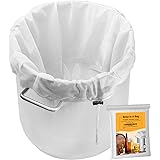
The brew-in-a-bag method revolutionizes the all-grain brewing process by consolidating mashing and lautering into a single vessel. Traditionally, these steps require separate mash tuns, hot liquor tanks, and sparging armaments, adding layers of complexity and equipment. BIAB streamlines this significantly, using a large mesh bag to contain the crushed malt within a single stock pot.
This simplified approach not only reduces equipment requirements but also minimizes cleanup, a significant benefit often overlooked by beginners. The malt is easily removed from the wort by simply lifting the bag, allowing for a quicker transition to the boil stage. The efficiency and straightforwardness of BIAB make it an ideal choice for compact spaces and those seeking an approachable entry into the rewarding world of home beer brewing.
Essential Equipment for the Compact Brewery
Equipping a small-batch brewery does not necessitate extensive investment; many items are likely already present in a well-stocked kitchen. Central to the operation is a 5-liter glass demijohn, paired with a bung and airlock, serving as the primary fermentation vessel. An 11-liter stock pot with a lid provides ample volume for both mashing and boiling, accommodating the 6 liters of purified water and 1 kilogram of Pilsner malt required for a typical 5-liter batch.
Key specialized tools include a durable brew bag for the malt and smaller muslin bags for hop additions, facilitating easy removal. A reliable thermometer, whether a standard brewing model or even a meat thermometer, is indispensable for precise temperature control during mashing. While a funnel and colanders are practical for transferring and straining, a siphon is highly recommended for cleanly transferring wort and beer, minimizing contact with undesirable sediment. These foundational tools form the backbone of an efficient and successful brewing setup.
Crafting Your Czech-Style Lager: Ingredient Deep Dive
The authentic character of a Czech-style lager hinges significantly upon the meticulous selection of its core ingredients: malt, hops, and yeast. Each component plays a pivotal role in shaping the final flavor profile, aroma, and appearance of this classic beer style.
Malt Selection: The Foundation of Flavor
For a crisp lager, Pilsner malt is the unequivocal choice. This two-row barley malt forms the backbone of many European lagers, contributing a pale golden color and a clean, delicate malt sweetness. Its low kilning temperature preserves a high enzymatic activity, crucial for efficient sugar conversion during mashing. The use of 1 kilogram of crushed Pilsner malt for a 5-liter batch provides the fermentable sugars necessary for a light-bodied yet flavorful brew.
Hops Profile: Bitterness and Aroma Balance
Saaz hops are the signature hop variety for Czech lagers, renowned for their noble characteristics. These hops impart a distinctive spicy, earthy, and floral aroma with a moderate bitterness that harmoniously balances the malt sweetness. The brewing process strategically incorporates 20 grams of Saaz hops early in the boil for bittering, followed by an additional 10 grams later in the boil to enhance aromatic compounds and deliver a complex hop character. This staged addition maximizes both bitterness extraction and volatile aroma preservation, creating a nuanced hop presence.
Yeast Strain: The Clean Fermenter
Lager yeast (specifically Saccharomyces pastorianus) is paramount for achieving the characteristic clean, crisp profile of a lager. Unlike ale yeasts that thrive at warmer temperatures and produce more fruity esters, lager yeasts prefer cooler fermentation environments, typically between 8-15°C, resulting in a cleaner flavor with minimal byproducts. Pitching 5 grams, or approximately half a packet, of a high-quality lager yeast into the cooled wort initiates a robust fermentation, converting sugars into alcohol and carbon dioxide. Understanding the specific temperature requirements of your chosen yeast strain is vital for optimal fermentation and flavor development.
The Precision of Mashing: Extracting Sugars
Mashing is the critical process where starches in the malt are converted into fermentable sugars by naturally occurring enzymes. The water purification step is essential here; removing contaminants like chlorine prevents undesirable off-flavors that can taint the delicate profile of a lager. Beginning with 6 liters of purified water, initially heated to 75°C, sets the stage for accurate temperature control. This initial strike temperature accounts for the temperature drop when the cooler malt is added.
Upon adding 1 kilogram of Pilsner malt to the brew bag within the stock pot, the temperature should stabilize around 65°C. This specific temperature range is optimal for the activity of alpha and beta amylase enzymes, which collectively break down complex starches into simpler fermentable sugars like maltose and unfermentable dextrins, influencing the beer’s body and final sweetness. Maintaining this mash temperature precisely for 60 minutes ensures maximum sugar extraction. Following this, raising the grain temperature to 75°C for an additional 20 minutes serves as a mash-out step, halting enzymatic activity and reducing the wort’s viscosity, thereby improving the efficiency of sugar extraction during the subsequent wort separation.
Wort Separation and Boiling: The Flavor Foundation
Following the mash, the crucial step of wort separation involves carefully removing the grain from the sugary liquid. In the BIAB method, this means gently lifting the brew bag from the pot and allowing the wort to drain. Extreme caution is necessary due to the high temperatures involved. Using a large colander to press out residual liquid from the grain bag maximizes the yield of fermentable sugars, often referred to as sparging in traditional brewing contexts. The spent grain, now devoid of most fermentable sugars, can be composted, showcasing the sustainable aspect of homebrewing.
The wort then proceeds to a vigorous boil, a multifaceted process vital for beer stability and flavor. Boiling serves several key purposes: sterilizing the wort, isomerizing hop acids to create bitterness, coagulating undesirable proteins (the “hot break”), and evaporating unwanted volatile compounds like DMS (dimethyl sulfide) precursors. For this lager, the boil schedule dictates two distinct hop additions. Initially, 20 grams of Saaz hops are added and boiled for 45 minutes, providing the foundational bitterness. A subsequent addition of 10 grams of Saaz hops for the final 15 minutes of the 60-minute boil contributes delicate aroma and flavor notes, characteristic of a true Czech-style pilsner.
Cooling and Fermentation: The Transformation Begins
Once the boil is complete, rapid cooling of the wort to approximately 10°C is absolutely paramount. This swift temperature reduction, often achieved by placing the hot pot in an ice bath while stirring the wort, minimizes the risk of bacterial contamination and helps precipitate proteins into a “cold break,” which contributes to beer clarity. Failure to cool quickly can lead to off-flavors, including undesirable cooked corn notes from DMS, or provide a fertile ground for wild yeasts and bacteria to flourish. During this critical cooling phase, meticulous sanitization of the demijohn, bung, and airlock is non-negotiable; a no-rinse sanitizer offers convenience and effectiveness, eliminating potential microbial threats.
With the wort chilled to the ideal temperature, 5 grams of lager yeast are “pitched” or added. Pitching yeast into wort that is too warm can fatally shock or kill the delicate yeast cells, leading to stalled or incomplete fermentation and undesirable flavors. Once the yeast is introduced, the airlock is fitted, preventing external contaminants from entering while allowing carbon dioxide, a byproduct of fermentation, to escape. Primary fermentation typically exhibits vigorous airlock activity for the first 24 to 48 hours as the yeast metabolizes the sugars, gradually slowing over 6 to 7 days, signaling the completion of this initial phase. Maintaining a stable fermentation temperature, ideally around 17-18°C for this specific yeast and style, is crucial for producing the desired clean, crisp lager profile.
Bottle Conditioning: The Final Polish
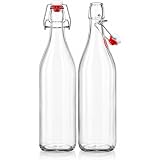
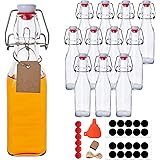
Upon the cessation of primary fermentation, typically indicated by a lack of CO2 activity in the airlock after 6 to 7 days, the beer is ready for bottling. This stage requires careful siphoning of the nascent beer into a clean pot, leaving behind the undesirable yeast sediment (trub) that has collected at the bottom of the demijohn. Minimizing trub transfer is crucial for a cleaner final product and preventing off-flavors. Flip-top bottles are an excellent choice for their reusability and reliable seal, though any sanitized, pressure-rated beer bottle will suffice.
Before sealing, a small pinch of brewing sugar is added to each bottle. This priming sugar provides a final food source for the residual yeast, initiating a secondary fermentation within the bottle. This process generates carbon dioxide, naturally carbonating the beer and creating that satisfying “pop” upon opening. The bottles are then moved to the fridge for at least two weeks for “bottle conditioning.” This cool maturation period is vital for the beer’s flavors to meld and mellow, allowing the crisp, clean characteristics of the lager to fully develop. This lagering process refines the beer, producing a smoothness that sets it apart.
Brewing Best Practices: From Cleanup to Creativity
Beyond the actual brewing steps, several best practices are integral to consistent success in home beer brewing. Paramount among these is meticulous post-brew cleanup and sanitization. All equipment, particularly the demijohn and any vessels that came into contact with wort or beer, must be thoroughly washed and then sterilized. Residual sugars and yeast can quickly become breeding grounds for spoilage microorganisms, jeopardizing future batches with off-flavors and potential infections. Investing in a quality brush for demijohns and a good no-rinse sanitizer is an investment in brewing longevity.
Furthermore, maintaining a detailed brewing log or journal is an invaluable habit for any brewer, from novice to expert. Documenting every variable—ingredient quantities, water treatment, strike temperatures, mash schedules, boil times, hop additions, fermentation temperatures, and even sensory observations—creates a reproducible record. This systematic approach allows for replication of successful batches and provides critical data for troubleshooting when variations occur. While adherence to proven recipes is a strong starting point, the art of brewing thrives on creativity. Experimentation with hop varieties, yeast strains, or even adjuncts can unlock unique flavor profiles. For instance, subtle changes in the Saaz hop schedule or exploring different lager yeast strains can significantly alter the balance and character of your next small-batch homebrew, ensuring a continuous learning and enjoyment process.
Pouring Out Answers: Your Czech Lager Brewing Q&A
What is small-batch homebrewing?
Small-batch homebrewing lets you make smaller amounts of beer, usually around 5 liters, which is perfect for beginners and requires less equipment and space.
What is the Brew-in-a-Bag (BIAB) method?
The BIAB method is a simple way to brew all-grain beer using just one pot, where malt is held in a large mesh bag to simplify mashing, lautering, and cleanup.
Why is small-batch brewing good for beginners?
It’s great for beginners because it has lower initial costs, requires less storage space for equipment and beer, and allows you to experiment without committing to large volumes.
What are the main ingredients for a Czech-style lager?
A Czech-style lager typically uses Pilsner malt for its base, Saaz hops for a spicy, earthy aroma, and a specific lager yeast for a clean, crisp taste.