The journey of homebrewing is incredibly rewarding. It involves continuous learning and refinement. Many brewers accumulate various tools over time. Some gadgets prove invaluable, while others fall short. This article explores essential homebrewing tools. These selections prioritize practicality and long-term value. They are based on extensive experience. This guide will help optimize your brewing setup.
As highlighted in the accompanying video, selecting the right gear is crucial. It directly impacts your brewing efficiency and enjoyment. The focus here is on tools that deliver consistent results. They also offer significant versatility. Smart investments in quality equipment pay off. This approach helps avoid unnecessary expenses. Consequently, your brewing experience improves significantly.
Establishing Criteria for Must-Have Brewing Gear
Choosing homebrewing tools demands careful consideration. A set of clear criteria guides wise purchasing decisions. Affordability is certainly a primary factor. Brewers often seek high-quality items without breaking the bank. However, a higher price does not always guarantee better performance. Value often lies in a tool’s overall utility and longevity. Thus, cost-effectiveness should always be a key metric.
Versatility is another paramount aspect. Tools that serve multiple functions reduce clutter. They also maximize your investment. Consider if a tool can be used for various brewing steps. Can it also be employed outside the brew house? Portability is furthermore important. Easy storage and transport simplify your brewing process. It also optimizes your workspace. Lastly, durability ensures a tool withstands rigorous use. Long-lasting equipment reduces the need for frequent replacements. Therefore, it provides greater peace of mind.
Precision Temperature Control: A Quality Thermometer
Accurate temperature control is foundational to successful brewing. A quality thermometer is non-negotiable for brewers. Mash temperatures directly impact enzyme activity. This affects sugar conversion and ultimately beer flavor. Boil temperatures are likewise critical for hop utilization. Fermentation temperatures are essential for yeast health and byproduct control. Therefore, precise readings are vital at every stage.
The Thermapen from Thermoworks is a prime example of such a tool. It offers super reliability and accuracy. While its initial cost, around $70-$80, may seem high, it is a long-term investment. Many homebrewers replace cheaper thermometers numerous times. This often exceeds the cost of a single Thermapen. The Thermapen itself boasts a lifespan of about 10 years. It also serves as an excellent workhorse for cooking tasks. Its versatility extends beyond brewing. Investing in a durable thermometer prevents common brewing issues.
The Versatile Stainless Steel Racking Cane
A simple yet indispensable tool is the stainless steel racking cane. Specifically, a 3/8-inch OD stainless steel cane is ideal. Paired with 3/8-inch ID food-grade silicone tubing, it offers excellent utility. This setup is perfect for hot-side applications. Moving hot water or hot wort becomes a safer process. The stainless steel construction resists heat. Silicone tubing remains flexible even at high temperatures.
Furthermore, this racking cane system provides exceptional versatility. A number two bung allows detachment of the cane. You can then insert it into a picnic tap. This enables bottling directly from kegs. Consequently, brewers can easily transfer their finished product. The cost of this setup is very reasonable, typically $10 to $15. It is a smart addition to any homebrew equipment collection. Its robust design ensures many years of service.
Entry-Level Carbonation: Pin Valve Regulator and Paintball CO2
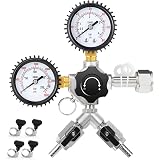
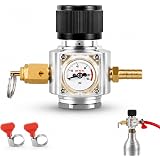
Transitioning to kegging can seem daunting. The cost and size of bulk CO2 sources are often barriers. A pin valve regulator atop a paintball CO2 tank offers a perfect solution. This setup provides an accessible entry point. It allows brewers to “get their feet wet” with kegeration. It avoids a large initial commitment. Paintball tanks are readily available for refills. Therefore, they simplify the carbonation process.
Moreover, this system maintains utility as your brewing scale grows. As you upgrade to a bulk CO2 source, the paintball setup remains valuable. It can be used for various auxiliary tasks. Setting keg lids with a burst of CO2 is one such use. Bottling from kegs also benefits from its precision. Having compatible tubing, such as 1/4-inch OD polyethylene, creates a plug-and-play system. If your main CO2 tank runs out, this acts as a crucial backup. It certainly gets you out of a pinch.
The Indispensable Carbonation Cap
The carbonation cap is a small but mighty tool. At approximately $10, it is an extremely affordable item. Opting for the stainless steel variety is highly recommended. Plastic versions lack the durability and longevity of stainless steel. This cap threads onto PET bottles. It allows connection to a CO2 source. Its uses are surprisingly extensive and varied.
This simple cap can carbonate more than just beer. Brewers can carbonate water and kombucha easily. It is also perfect for homemade sodas or mixers. Children’s drinks or adult beverages stay fizzy longer. Furthermore, it serves practical purposes beyond carbonation. It can be used to sanitize or clean beer lines. Simply attach it to a cleaning solution container. The carbonation cap’s utility makes it truly indispensable. It truly enhances your homebrew equipment.
The Multifunctional Keg: Beyond Dispensing Beer
The keg is truly a cornerstone of modern homebrewing. Its primary function, dispensing beer, is well-known. However, kegs offer far more functionality than simple serving. They are robust, sanitary, and highly versatile vessels. Consequently, they revolutionize many aspects of the brewing process. Acquiring good quality used kegs is a smart move. Look for them on platforms like Marketplace or Craigslist. New kegs are often significantly more expensive.
Kegs also double as precise measuring devices. Each standard keg holds 5 gallons or 19 liters. This consistency is invaluable for batch size management. Furthermore, kegs can serve as excellent fermenters. This eliminates the need for extra primary fermenters. Pressure fermenting directly in a keg is also possible. Lastly, they are useful for storing hot sparge water. This is particularly helpful for single-brew pot setups. The keg’s adaptability makes it a critical piece of homebrew equipment.
Unlocking Pressure Fermentation: The Spunding Valve
Spunding valves represent a significant advancement for homebrewers. These devices allow for pressure fermentation in kegs. This technique offers several distinct advantages. It greatly reduces the escape of desirable volatile compounds. This results in a cleaner, crisper beer profile. Additionally, it can accelerate fermentation times. These valves enable CO2 recapture during fermentation.
Consequently, using a spunding valve can save approximately 80% on CO2 consumption. This is a substantial long-term cost saving. Various types of spunding valves are available. Store-bought options, like the adjustable “blowtie” from Kegland, are excellent. Alternatively, many brewers opt to build their own DIY versions. These homemade valves are very inexpensive. Regardless of the type, a spunding valve is a must-have for any modern brew house. It truly optimizes your homebrewing process.
Honorable Mentions for Enhanced Brewing
While not strictly “must-haves,” certain tools offer significant enhancements. A clear draft float system is one such item. Any float with a screen on it works well. This system allows for keg fermenting. It also enables adding fruit directly into the keg. The float ensures you always draw clearer beer from the top. It keeps particulates from the bottom of the keg. Consequently, you achieve cleaner pours faster.
A sous vide machine is another worthy mention. While not essential solely for brewing, it is highly adaptable. If you already own one, it has valuable applications. During hot summer months, it can heat strike water without an open flame. This is useful in garages or barns. It gently brings water up to temperature in a cooler. Moreover, it can heat water in a keg. This is perfect if you have only one brew pot. These specialized homebrewing tools add convenience and precision.
Brewing Up Clarity: Your Homebrewing Tools Q&A
Why is accurate temperature control important for homebrewing?
Accurate temperature control is crucial because it directly impacts enzyme activity during mashing, hop utilization during boiling, and yeast health during fermentation. Precise readings ensure consistent results and good beer flavor.
What is a stainless steel racking cane used for in homebrewing?
A stainless steel racking cane, paired with silicone tubing, is used for safely transferring hot liquids like wort or water. It can also be used to bottle beer directly from a keg.
How can a beginner start kegging their homebrew without a large initial cost?
Beginners can start kegging affordably by using a pin valve regulator with a paintball CO2 tank. This setup is a cost-effective way to get familiar with kegeration before investing in larger CO2 sources.
What is a carbonation cap and what can it be used for?
A carbonation cap is a small, affordable stainless steel tool that threads onto PET bottles, allowing you to connect them to a CO2 source. It can be used to carbonate various beverages like beer or water, and even to clean beer lines.