Have you ever considered brewing an American Blonde Ale, often hailed as one of the simplest all-grain beers, yet hesitated due to its reputation for being “boring”? The video above courageously tackles this perception, demonstrating how a well-crafted American Blonde Ale recipe can be anything but dull. This comprehensive guide is intended to complement the detailed instructions provided in the video, offering an expanded perspective on ingredients, techniques, and the art of perfecting this approachable yet nuanced beer style.
For many all-grain brewing enthusiasts, the allure of crafting a light, crisp, and flavorful beer is undeniable. This particular Blonde Ale recipe, designed for the beginner-to-intermediate homebrewer, is a prime example of how thoughtful ingredient selection and meticulous process control can elevate a seemingly straightforward style into a truly rewarding experience. It serves as an excellent entry point into brewing pale beers, building a solid foundation for future brewing adventures.
The Underrated Charm of an American Blonde Ale
Often referred to as a “lawnmower beer,” the American Blonde Ale is frequently overlooked in favor of more aggressively hopped or complex styles. However, its very simplicity presents an opportunity for brewers to showcase elegance and balance. It is a lightly flavored, malt-focused beer that incorporates American hop characteristics, ideally without becoming overly bitter or overpowering. Unlike a Cream Ale, which often uses adjuncts like corn or rice, a traditional Blonde Ale is primarily built upon a barley malt base, allowing its foundational grain bill to shine through.
1. The intention behind brewing a Blonde Ale is often to achieve a beer that is incredibly drinkable and refreshing, appealing to a broad range of palates. Its subtle hop presence provides a counterpoint to the gentle malt sweetness, creating a harmonious profile that encourages another sip. Achieving this balance requires careful consideration of each ingredient, ensuring that no single element dominates the overall experience.
Defining the American Blonde Ale Style
The Brewers Association Guidelines describe the American Blonde Ale as an “easy-drinking, approachable, malt-oriented American craft beer, often with fruit, hop, or yeast notes.” Key characteristics typically include:
- **Appearance:** Pale straw to deep gold in color, often with excellent clarity and a persistent white head.
- **Aroma:** Light malt sweetness, possibly with hints of bread or biscuit. Subtle hop aroma (floral, citrusy, or spicy) may be present. Very low or no fruity esters.
- **Flavor:** A delicate balance of malt sweetness and low-to-medium hop bitterness. Malt flavors of bread, biscuit, or a very light caramel may be detected. Hop flavors generally mirror the aroma.
- **Mouthfeel:** Light to medium body with moderate carbonation. Smooth and clean finish.
- **ABV:** Typically ranges from 4.0% to 5.5%.
It is important that a Blonde Ale does not encroach upon the hoppiness levels of an American Pale Ale or an IPA; it is positioned lower on the bitterness and hop intensity spectrum, ensuring its sessionable character is maintained.
Crafting the Cascade Blonde Ale: A Detailed Recipe Breakdown
The recipe featured in the video is thoughtfully designed to produce a Blonde Ale that is both accessible for new brewers and surprisingly complex in flavor. Each ingredient choice plays a pivotal role in achieving the beer’s unique character.
2. The foundational element of any beer is its malt bill, and for this all-grain brewing recipe, a simple yet effective combination is employed to achieve desired flavor and color.
Malt Selection: Building a Flavorful Base
The backbone of this Blonde Ale is constructed from just two malts, demonstrating that complexity is not always synonymous with a lengthy ingredient list. While a single-malt (SMASH) beer could work for this style, the addition of a specialty malt here adds a nuanced layer of flavor.
-
**Pale Ale Malt (10 pounds):**
This is the primary base malt, providing the fermentable sugars and much of the beer’s color and body. Pale Ale Malt, often exemplified by varieties like Marris Otter or Golden Promise, is typically about one degree Lovibond darker than standard two-row Pale Malt. This slight increase in color contributes to a more pronounced malt flavor profile, often described as biscuity or bready, with a richer depth than the more neutral two-row. This choice sacrifices a fraction of lightness in color for a significant gain in flavor, a trade-off that is highly beneficial for an interesting Blonde Ale.
-
**Honey Malt (0.25 pounds / 4 ounces):**
Included in a very small quantity, Honey Malt is a specialty malt known for imparting distinctive honey-like notes and a slight increase in body. It is similar to Melanoidin or Aromatic Malts in its flavor contribution, adding a subtle sweetness and a pleasant aroma. While it did contribute to a slightly darker beer than initially anticipated (reaching an SRM of approximately 5.5, which is on the higher end for the style), its flavor impact is quite positive, enhancing the overall malt dimension without being cloying.
This minimalist yet effective malt bill allows for the clean expression of a crisp beer while introducing subtle complexities that prevent it from being truly “boring.”
Hop Profile: The Cascade Blonde Ale’s Signature
Hops in a Blonde Ale are primarily for balance and aroma, rather than aggressive bitterness or overwhelming flavor. The goal is to have a noticeable hop character without venturing into Pale Ale territory.
3. A total of 19 IBUs is targeted for this recipe, striking a delicate balance between bitterness and aromatic contribution.
-
**Columbus Hops (0.25 ounces at 60 minutes):**
This addition serves as the bittering charge, contributing approximately 12 IBUs. Columbus is a classic American hop known for its clean, firm bitterness and earthy, spicy, sometimes slightly dank aroma. Its use here ensures a foundational bitterness that supports the malt without being harsh.
-
**Cascade Hops (2 ounces total):**
Cascade, a quintessential American aroma hop, is split into two additions: 1 ounce at 10 minutes and 1 ounce at 0 minutes (whirlpool/flameout). These late additions contribute approximately 7 IBUs and infuse the beer with its signature floral, citrusy (often grapefruit), and sometimes piney notes. This strategic timing maximizes the aromatic impact of Cascade, creating a delightful interplay with the malt base and providing the characteristic Cascade Blonde Ale aroma.
Yeast Selection: The Clean Fermentation Imperative
For an American Blonde Ale, a clean fermenting American Ale yeast is paramount. The chosen yeast strain should allow the malt and hop characteristics to shine without imparting excessive fruity esters or off-flavors.
4. While Fermentis US-05 is a widely recognized and reliable option, the video specifically utilizes Lallemand BRY-97, an equally clean and robust American Ale strain.
-
**Lallemand BRY-97 Dry Yeast (1 packet):**
This yeast strain is known for its relatively neutral fermentation profile, high flocculation, and ability to produce a crisp, dry finish. It ferments quickly and efficiently, contributing very little in terms of yeast character. This allows the subtle complexities of the Pale Ale and Honey Malts, along with the aromatic contributions of Cascade hops, to be fully appreciated.
-
**Fermentation Temperature Control:**
Regardless of the American Ale yeast chosen, maintaining a fermentation temperature between 65-68°F (18-20°C) is critical. Fermenting at the lower end of the yeast’s recommended temperature spectrum minimizes the production of undesirable fruity esters and diacetyl, ensuring a clean flavor profile characteristic of the style. Pressure fermentation can also be employed to achieve similar cleanliness, especially if precise temperature control is challenging.
Other potential yeast options for experimentation include Kolsch strains for a slightly fruitier, crisper profile, hybrid Lager strains for enhanced clarity and smoothness, or even Kveik strains like Voss or Lutra for fast and clean fermentation at higher temperatures, offering versatility for the homebrewing beginner.
Water Profile: Achieving Balance
Water chemistry is often overlooked by beginners but plays a significant role in the final beer’s flavor and mouthfeel. For this Blonde Ale, a balanced profile is targeted to support both malt and hop characteristics.
5. Starting with 8 gallons of reverse osmosis (RO) water ensures a clean slate, allowing for precise mineral additions.
-
**Target Profile:**
- Calcium: 59 ppm (contributes to yeast health, protein coagulation, and crispness)
- Magnesium: 13 ppm (supports enzymatic reactions and adds to beer bitterness)
- Sodium: 26 ppm (enhances mouthfeel and can round out flavors)
- Chloride: 104 ppm (emphasizes malt character, contributing to perceived sweetness and fullness)
- Sulfate: 107 ppm (accentuates hop bitterness and dryness)
- Bicarbonates: 0 ppm added (important for mash pH stability with lighter malts)
-
**Salt Additions:**
- 3 grams Gypsum (Calcium Sulfate): Increases Calcium and Sulfate, enhancing hop bitterness.
- 4 grams Epsom Salt (Magnesium Sulfate): Adds Magnesium and Sulfate.
- 2 grams Sodium Chloride (Table Salt): Adds Sodium and Chloride, improving mouthfeel.
- 4 grams Calcium Chloride: Increases Calcium and Chloride, emphasizing malt.
This balanced approach ensures that neither the malt nor the hops are overly emphasized, contributing to the beer’s overall harmony and drinkability. Adjustments can be made to lean more towards malt (higher chloride) or hops (higher sulfate) based on personal preference.
The Brewing Process: Grain to Glass in a Week
The efficiency and simplicity of this recipe extend to the brewing process itself, making it highly achievable for all-grain brewers, even those with limited experience.
6. The entire brew day, from mash to boil to chilling, is streamlined to be as straightforward as possible.
Mashing: Simple and Effective
A single infusion mash is employed, which is the most common and simplest method for all-grain brewing.
- **Mash Schedule:** A 60-minute rest at 152°F (67°C) is ideal for this beer. This temperature promotes the activity of beta-amylase enzymes, leading to a highly fermentable wort that results in a drier, crisper beer. Following the mash, a 15-minute mash-out at 170°F (77°C) stops enzymatic activity and reduces wort viscosity, aiding in sparging and improving sugar extraction.
Boil and Hop Additions
After lautering and sparging, the wort is brought to a vigorous boil. The hop additions are staggered to achieve both bitterness and aroma.
- **60-Minute Mark:** The 0.25 ounces of Columbus hops are added. This long boil time allows for maximum alpha acid isomerization, contributing the intended 12 IBUs of bitterness.
- **10-Minute Mark:** 1 ounce of Cascade hops is added, along with a Whirlfloc tablet (for clarity) and yeast nutrient. The 10-minute boil extracts some hop flavor and aroma compounds while still contributing a small amount of bitterness.
- **0-Minute Mark (Flameout/Whirlpool):** The final 1 ounce of Cascade hops is added. This addition maximizes the preservation of delicate hop aromatics and essential oils, which would otherwise be volatilized during a longer boil. A whirlpool is then initiated to consolidate trub and hop debris into a cone in the center of the kettle, facilitating clearer wort transfer.
Fermentation and Conditioning
The efficiency of BRY-97 yeast and the clean profile of the beer mean a relatively short fermentation period.
- **Pitching:** Once the wort is chilled to approximately 65°F (18°C), the BRY-97 yeast is pitched. An original gravity of 1.046 was achieved, perfectly on target.
- **Fermentation Duration:** The primary fermentation typically completes within about 7 days at 65-68°F (18-20°C). This rapid fermentation, coupled with the yeast’s clean profile, ensures that the beer is ready for consumption quickly.
- **Conditioning:** One of the benefits of this particular Blonde Ale is its minimal conditioning requirements. As no dry hopping is initially performed (in the base beer), and the yeast produces very few off-flavors, the beer can often go from fermenter to keg (or bottle) and be ready for enjoyment within a week of fermentation completion. This makes it an ideal fast brewing recipe for those who appreciate quick turnarounds.
Tasting the Golden Ticket: A Sensory Exploration
The “Golden Ticket” Blonde Ale is a testament to the fact that simple beers can indeed be delicious and nuanced. At 5.4% ABV and 19 IBUs, it strikes an ideal balance for a sessionable beer.
7. Upon tasting, several key characteristics are immediately evident, reflecting the careful ingredient selection and brewing process.
- **Appearance:** The beer pours a perfectly clear, radiant golden color, albeit a touch darker than a typical Blonde Ale (estimated SRM 5.5). This deeper hue is attributed to the Honey Malt. A beautiful, fluffy white head forms with excellent retention, leaving elegant lacing on the glass.
- **Aroma:** The aroma is delicate but present, dominated by the classic grapefruit and floral notes of Cascade hops, with a subtle lemony citrus undertone. There are no noticeable yeast esters, reinforcing the clean fermentation.
- **Mouthfeel:** Exceptionally drinkable, this beer possesses a light body and a balanced mouthfeel. Despite being relatively dry, there is sufficient substance to carry the flavors effectively, leading to a crisp and refreshing finish.
- **Flavor:** The initial impression is hop-forward for a Blonde Ale, with the Cascade hops delivering pleasant grapefruit and floral accents, complemented by a slight piney resinousness. This initial hop burst gracefully transitions into a delightful malt character, reminiscent of white bread, with subtle honey notes from the Honey Malt. Hints of biscuity maltiness, likely from the Pale Ale Malt, add further dimension. The beer is undeniably a “lawnmower beer” – easy to drink, balanced in both hop and malt, and not overwhelming at 5.4% ABV.
This American Blonde Ale transcends its “boring” stereotype by offering a clean, balanced, and flavorful experience that can be enjoyed year-round.
Experimentation Corner: Dry Hopping with a Pressurized Growler
For brewers looking to explore new flavors without risking an entire batch, the video introduces an ingenious method: dry hopping in a pressurized growler. This technique is invaluable for discerning how specific hop varieties (or other additions) impact a beer’s character on a small scale.
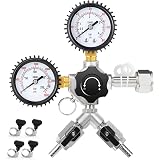
8. The Vevor pressurized growler tap system, a half-gallon, double-wall insulated growler equipped with a miniature CO2 regulator and standard tap faucet, is shown as an ideal tool for this kind of experimentation.
- **The Process:** A portion of the finished Blonde Ale is transferred from the keg into the growler. A small hop bag containing a quarter to half an ounce of a new hop variety, in this case, Rakau hops, is added. The beer is then allowed to sit on the hops in the refrigerator for 2-3 days, ensuring a cold extraction of hop aromatics.
- **The Results (Rakau Hops):** The dry-hopped version immediately shows a significant visual difference, developing a noticeable haze compared to the crystal-clear base beer. The aroma and flavor profile are dramatically altered. Rakau, a New Zealand hop, imparts distinct characteristics such as pithy citrus, apricot, green pepper, and tropical fruit notes, including pineapple and unripe orange. While distinct and interesting, these notes might not always be harmonious with the original recipe’s intent, highlighting the value of small-batch experimentation.
This method allows brewers to discover new flavor combinations and refine their understanding of hop characteristics without the commitment of a full batch. It represents a fantastic way to personalize an otherwise standard Blonde Ale recipe, making it truly unique. Whether sticking to the base recipe or venturing into dry-hopping experiments, the American Blonde Ale stands as an inviting canvas for all homebrewers.
Brewing Up Answers: Your Blonde Ale Q&A
What is an American Blonde Ale?
An American Blonde Ale is an easy-drinking, approachable, and malt-oriented American craft beer. It’s known for being light, crisp, and refreshing with a balanced flavor.
Why is the Cascade Blonde Ale a good beer for beginners to brew?
This recipe is considered one of the simplest all-grain beers, making it an excellent entry point for new brewers. It uses straightforward techniques and common ingredients.
What kind of hops are typically used in this Blonde Ale recipe?
This recipe uses Columbus hops for a clean bitterness and Cascade hops for its signature floral and citrusy aroma. Hops are used to balance the malt without being overpowering.
What type of yeast should I use for an American Blonde Ale?
For an American Blonde Ale, it’s best to use a clean-fermenting American Ale yeast like Lallemand BRY-97 or Fermentis US-05. These yeasts ensure the malt and hop flavors shine through without adding strong fruity notes.
What characteristics can I expect from a finished American Blonde Ale?
You can expect a clear, golden beer with a light body and a clean, crisp finish. It will have a delicate balance of subtle malt sweetness and low-to-medium hop bitterness with pleasant floral or citrus aromas.